written by Gabbie Lochbaum
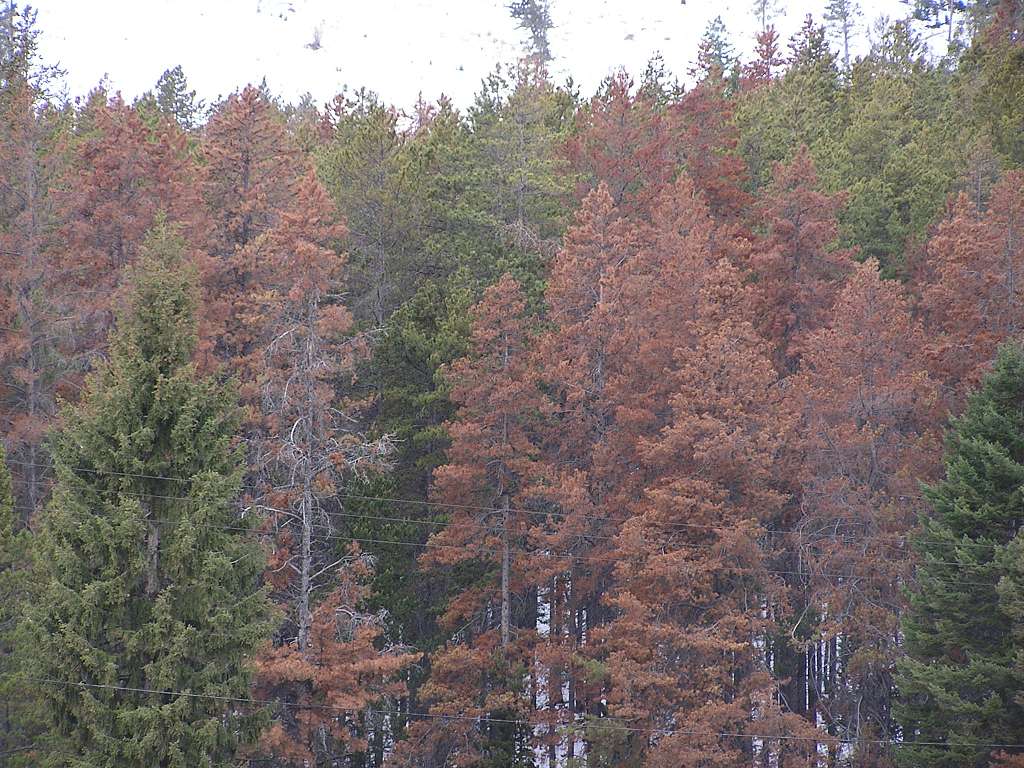
The Mountain Pine Beetle (MPB) is native to western North America, spanning from Canada to Mexico. Intensifying outbreaks have resulted in expansion from their historic range into northern British Columbia and eastern Alberta. Concern is mounting, with at least two states currently prohibiting imported wood from states with known MBP outbreaks.
Governor Jared Polis created the Ponderosa Mountain Pine Beetle Task force in December of 2025 following a significant outbreak of MPB that year. In 2026, Coloradoans’ concerns are growing in the wake of one of the warmest and driest winters in state history. Though in May, an unusual snowstorm brought welcomed moisture to the Front Range.
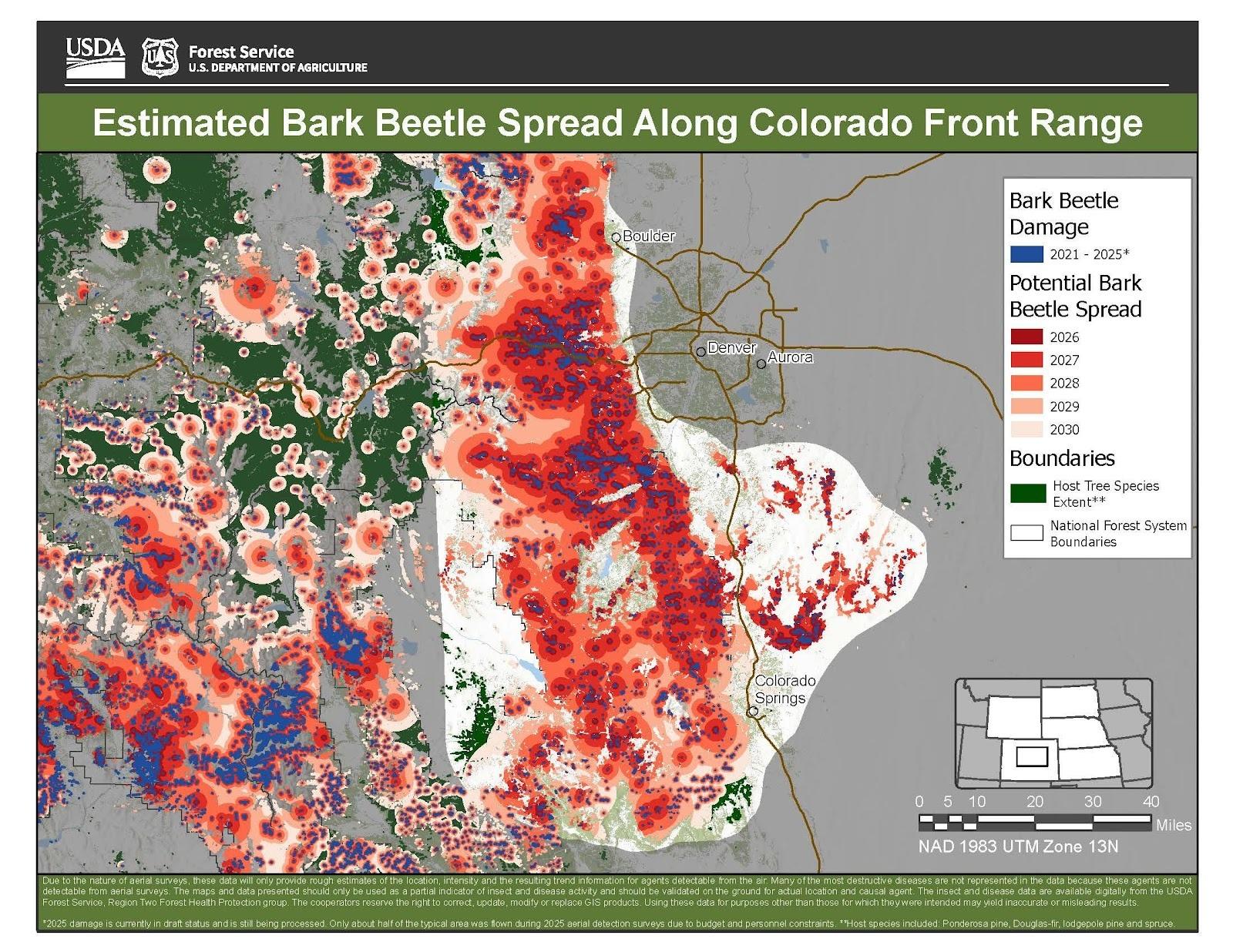
Mountain Pine Beetles threaten 22 species of pine in North America (1). Large Ponderosa Pine trees are the most frequently infested, with Lodgepole and Limber Pines also being favored (2). Though native to western pine forests, the MPB can do considerable damage when conditions are right. Outbreaks begin with a stressed tree, typically due to drought and warmer temperatures, which climate change is intensifying. This winter was one of the hottest and driest in history on the Front Range. Dead trees from MPB infestations will add fuel to a worrying wildfire season ahead.
Drought weakens a pine tree’s first line of defense, which is “pitching” beetles out. A tree does this by secreting resin where a beetle is boring a hole. This either drowns it or forces it out of the tree. Weakened trees’ chemical defenses are also inhibited, leaving them vulnerable to blue stain fungus, which MPBs carry. This fungus blocks a tree’s water and nutrient transport, which then provides nutrients to MPB larvae while simultaneously choking the tree to death. Equally concerning, MBP larvae overwinter in pine trees, meaning their survival rates increase in warmer winters.
If you discover an infested tree in your yard, it can’t be saved and should be removed. There are, however, options to prevent infestation in the first place.
- Thin your trees. Thinning your trees and the surrounding brush helps to maintain an open canopy which allows light and nutrients to get through easily and keep your trees healthy. It also reduces competition from other trees. The trees that remain after thinning have a greater chance of being healthy and primed to fight off a MPB infestation.
- Create a trap. Pheromones can be used to attract beetles to a “trap tree” which is then immediately disposed of. Different pheromones may also be used to deter beetles from an area.
- Use preventative insecticides. The Colorado Forest Service recommends that this method only be employed on high-value trees. This should only be done by a licensed pesticide applicator (“Management Options – Colorado State Forest Service”).
- Remove an infested tree as soon as you discover it. MPBs emerge from their host tree in late summer in search of new ones to infest. Infested trees will often have dried resin on the outside in the shape of popcorn from trying to pitch out beetles. There may also be reddish-brown dust on a tree or at the base of it. If you remove the bark, you may find larvae and/or larval tunnels. Chips of bark may gather at the base of the tree, as woodpeckers are interested in eating the larvae that lie beneath. Look for these signs.
Once a tree is infested, you should remove and dispose of it immediately. Contact your local forest service or a professional arborist or forester for help. County services may also be available in some areas.
- Dispose of infested wood. On Colorado State University’s website, there is a map of drop-off locations within the Front Range where you can take infested wood to be disposed of. This should be done in a timely and safe manner to ensure beetles don’t fly out of the tree and infest other trees on the way to a disposal location.
- Solar treatment. Cut down infested trees, stack them in a sunny area and cover them with clear plastic. This creates hot, unfavorable conditions for the larvae and kills them off.
- De-barking. Cut down the infested tree, remove its bark and leave it to air out. This must be done before the larvae mature into beetles. Larvae will die without the bark for protection.
- Chipping. Cut down the infested tree and chip it to kill larvae. Spread the chips thinly to ensure larvae don’t survive.
- Bury the tree. Bury it under at least 8 inches of soil to ensure that the beetles can’t dig their way out. (2)
The Colorado State Forest Service maintains a list of contractors on their website who indicate that they can assist with infested trees in the central and northern Front Range. Colorado Department of Agriculture’s website has a pesticide applicator search where you can find a licensed pesticide applicator should you decide to go that route. Report infestations to the Colorado State Forest Service.
Gabbie is a naturalist working in sales and marketing at Front Range Birding and Optics and is pursuing a bachelor’s degree in Ecology and Evolutionary Biology at CU Boulder.
References in this article
- Mountain Pine Beetle, Minnesota Department of Agriculture. https://www.mda.state.mn.us/plants-insects/mountain-pine-beetle
- Mountain Pine Beetle, Jefferson County, Nov. 2025. https://www.jeffco.us/DocumentCenter/View/34067/Mountain-Pine-Beetle-PDF
- Mountain Pine Beetle FAQs, Gilpin County, 2026, https://gilpincounty.colorado.gov/mountain-pine-beetle-faqs