As we’ve trundled along over the past couple of months waiting for winter to eventually arrive it’s been easy to fall into the habit of thinking, “Oh, the Eastern Plains will never have a thick blanket of snow this year, and the reservoirs will just keep having lots of open water.” Well, Saturday morning provided a bit of a wake-up call at the Wheat Ridge Greenbelt with temps in the teens and a few of the “lakes” frozen or mostly frozen over, as were our bird-walk participants. None-the-less we sallied forth and ended up having an incredible morning with 45 species.
Most of you know that I always like to take time to point out what species we missed on a bird walk and why that might have been the case. Well, that’s a bit difficult to do for this outing. Certainly, we missed out on many possible species, but we saw so many great birds that, overall, there are no lamentations this morning.
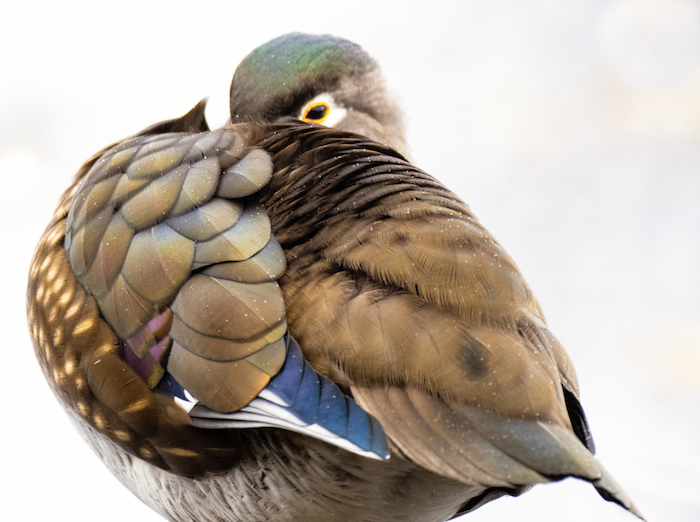
Starting with the Anatidae family (geese and ducks) we had fourteen species. A highlight for me being a female Wood Duck that had her head tucked in but was peaking at us with just a bit of that white around the eye showing, and a nice glimpse of her dark turquoise-blue speculum (secondary flight feathers).
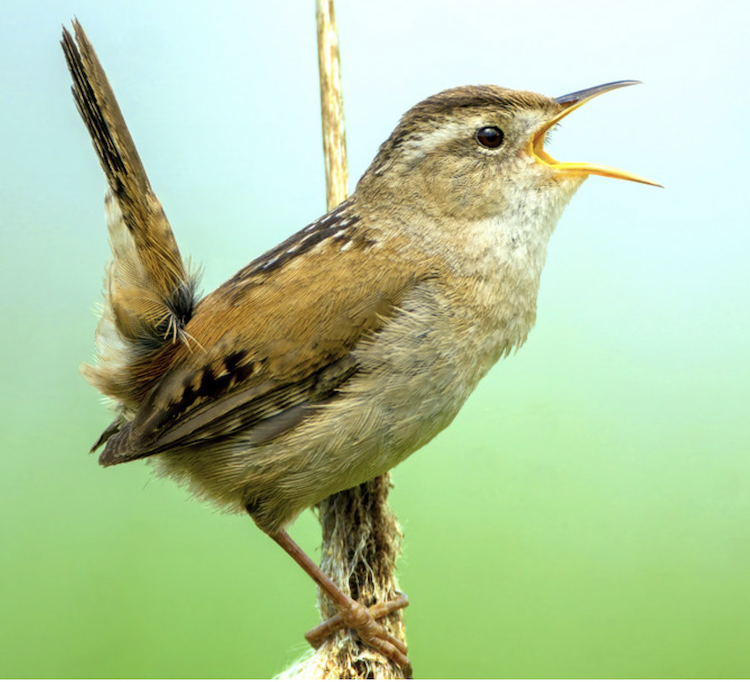
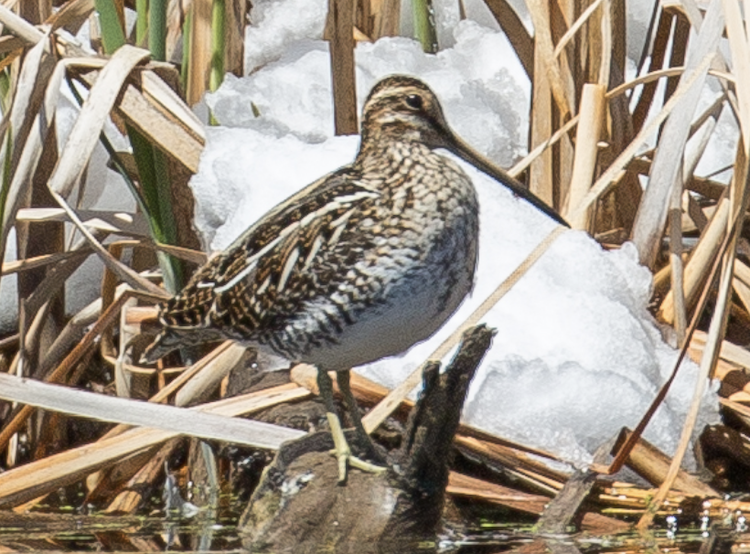
Among the other waterfowl we had a Great Blue Heron, a juvenile Double-crested Cormorant, and an incredible three Wilson’s Snipe. These last with their cryptic plumage gave us some good challenges in discerning them amidst similarly colored rocks and grass. Everyone in our group now knows that Snipe have bold longitudinal light-beige streaking on their back. Two other wet-habitat species we saw were a couple of American Dippers along Clear Creek and a Marsh Wren that accommodatingly popped out briefly from being its usual seldom-seen reclusive denizen-of-the-cattails.
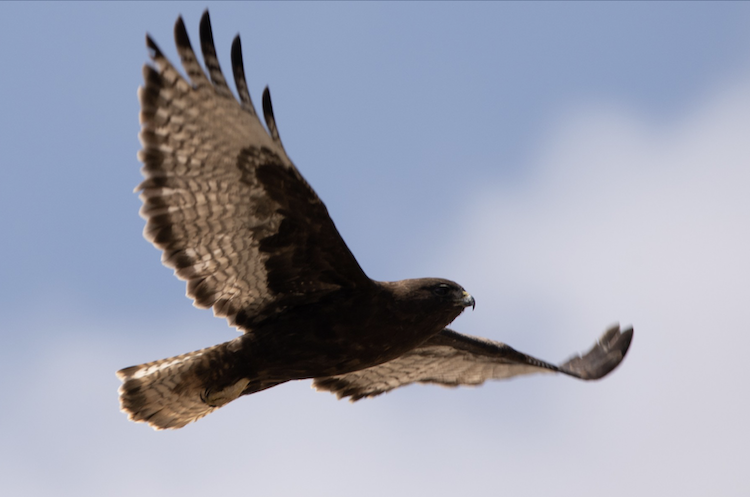
For raptors, we had a single American Kestrel sitting where they often sit on the highest available perch, a Cooper’s Hawk was seen doing a quick stooping dive over the creek, and we had three Red-tailed Hawks. One of these was a dark-morph Red-tail which has been resident along the Greenbelt for the last couple of months. Regionally, about ten percent of our western Red-tails are dark morph birds – this is a permanent plumage coloration and not a “phase,” as has been occasionally remarked.
Common Buckthorn (Rhamnus cathartica) is an invasive shrub that occurs in thick stands along the Greenbelt and its dark berries are quite popular with American Robins and Cedar Waxwings. The Buckthorn even got some attention from Bohemian Waxwings back in the winter of 2022-2023. We were fortunate on our walk to see a few Cedar Waxwings amongst the Robins.
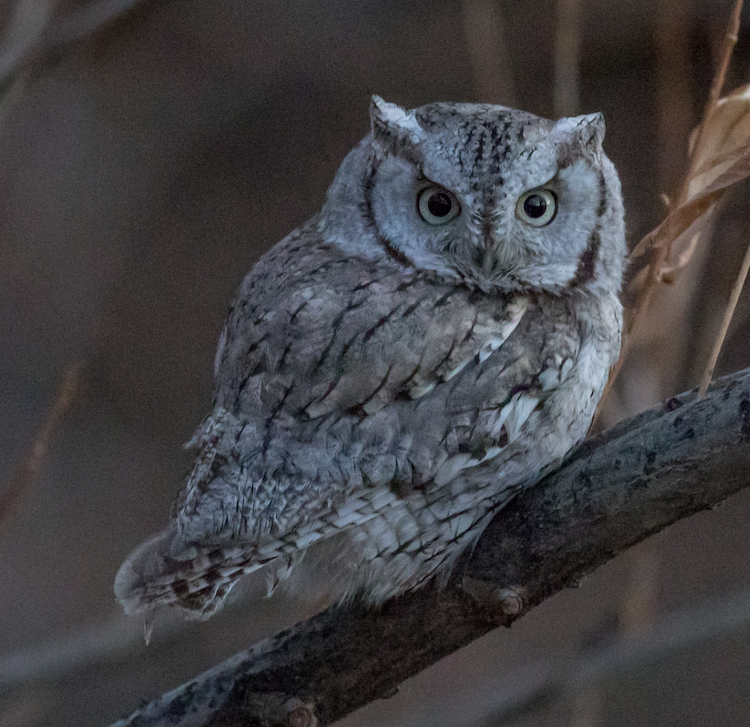
Finally, we lucked into finding an Eastern Screech Owl perched in a cavity in an old cottonwood snag. These guys are found primarily east of Colorado but as cottonwood gallery forests have proliferated over the last 150 years along the North and South Platte Rivers and in urban areas the cavity-nesting Eastern Screech Owls have followed along becoming uncommon residents. This is the time of year when they are starting to set up territories and calling more – not the whinny call that some of you may know, but rather a series of rapid little calls on the same pitch. They will then become mostly quiet in March when egg-laying commences. Fledged youngsters can sometimes be observed in mid-May.
Good birding! Chuck
Wheat Ridge Greenbelt
Jan 10, 2026 7:50 AM – 1:32 PM
45 species (+1 other taxa)
14 participants
Cackling Goose 684
Canada Goose 4
Cackling/Canada Goose 300
Wood Duck 2
Northern Shoveler 2
Gadwall 62
American Wigeon 7
Mallard 201
Green-winged Teal 26
Ring-necked Duck 20
Lesser Scaup 4
Bufflehead 14
Common Goldeneye 18
Hooded Merganser 24
Common Merganser 3
Mourning Dove 1
American Coot 6
Wilson’s Snipe 3
Ring-billed Gull 61
Double-crested Cormorant 1
Great Blue Heron 1
Cooper’s Hawk 1
Red-tailed Hawk 3 (one dark morph)
Eastern Screech-Owl 1
Downy Woodpecker 2
Hairy Woodpecker 1
Northern Flicker 6
American Kestrel 1
Black-billed Magpie 9
American Crow 3
Common Raven 4
Black-capped Chickadee 28
Bushtit 3
White-breasted Nuthatch 2
Marsh Wren 1
American Dipper 2
European Starling 7
American Robin 40
Cedar Waxwing 9
House Finch 3
American Goldfinch 20
American Tree Sparrow 2
White-crowned Sparrow 27
Dark-eyed Junco 3
Dark-eyed Junco (Slate-colored) 1
Song Sparrow 16
Spotted Towhee 2