– written by Dave Kwasnick
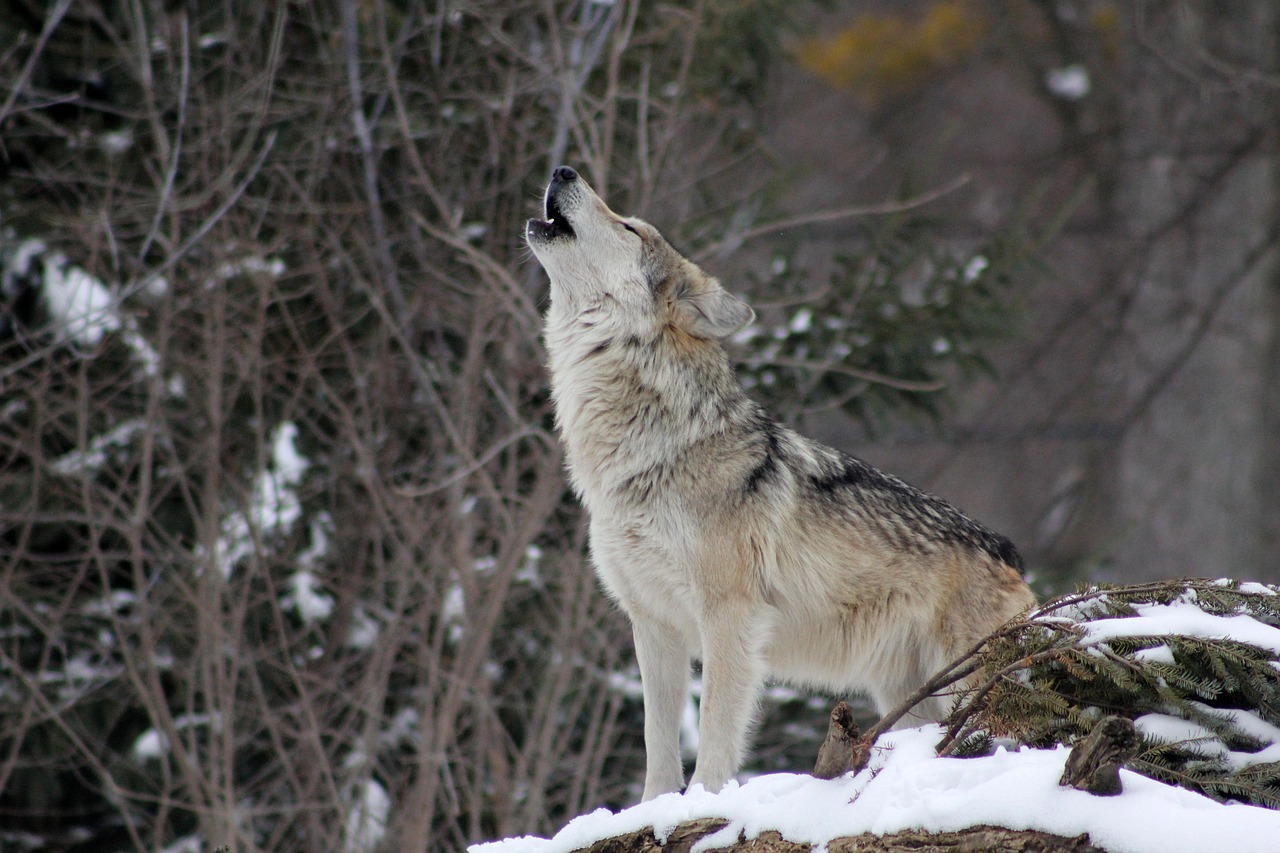
There’s a sound Colorado has forgotten. Not the bugle of an elk in a frosted valley. Not the chatter of magpies in a cottonwood grove. Not even the howl of wind racing across North Park at dusk. I’m talking about the howl of a wolf. For more than 80 years, that sound was missing from Colorado’s wild places. And whether people realized it or not, the silence changed everything. Now wolves are back.
And despite the political shouting matches, the fear campaigns, and the social media comment wars, the reality is this: wolves are not invaders. They are restorers. They are apex predators, keystone species, and one of the most important ecological forces North (America has ever known. Colorado’s ecosystems evolved with wolves. Elk evolved with wolves. Aspen forests evolved with wolves. Even songbirds evolved in landscapes shaped by wolves. That’s the part a lot of people miss. Wolf reintroduction is not just about wolves. It’s about rebuilding balance.
For decades, Colorado has wrestled with an ecological imbalance hiding in plain sight. In many areas, elk populations have exploded beyond what the landscape can sustainably support. Without natural predation pressure, elk linger too long in river corridors, over-browse young willow and aspen, and strip critical vegetation down to toothpicks. That damage ripples outward. Beavers lose the woody vegetation they need for food and dam-building. Streambanks erode. Wetlands shrink. Native plants disappear. Insects decline. Songbird habitat collapses. All because one major piece of the puzzle vanished.
Wolves change that dynamic almost immediately. Not simply by reducing elk numbers, but by changing elk behavior. Biologists call this the “ecology of fear,” though honestly, that phrase sounds more dramatic than it is. It’s really about movement. Wolves force prey species to stay alert, move more often, and avoid lingering in vulnerable areas like creek bottoms and willow thickets. When elk stop camping out in those sensitive areas, the landscape begins to recover. Young aspens finally grow taller than a few inches. Willow stands regenerate. Riverbanks stabilize. Wetlands rebound. And when those habitats rebound, birds respond. Fast.
That’s one of the most exciting parts of wolf restoration in Colorado, especially for birders and conservationists who understand how interconnected ecosystems really are. Healthy willow and aspen habitat supports a staggering number of bird species. Yellow Warblers, Lincoln’s Sparrows, Warbling Vireos, Willow Flycatchers, MacGillivray’s Warblers, and countless migratory species depend on dense riparian vegetation for nesting and food. When wolves help restore those habitats, birds benefit directly.
Even beavers become part of the story. As willow communities recover, beavers return. Their dams slow water, create wetlands, and dramatically increase biodiversity. Those wetlands become nurseries for insects, amphibians, waterfowl, shorebirds, and migratory birds moving through Colorado each spring and fall. In other words, wolves don’t just create healthier predator-prey relationships. They help create bird habitat. That matters enormously in Colorado, where migratory bird populations face mounting pressure from drought, development, wildfire, habitat fragmentation, and climate change. A functioning ecosystem is more resilient than a broken one. And wolves help ecosystems function.
Now, if you’ve spent any time in Colorado over the past few years, you already know wolf reintroduction has become emotionally charged. Ranchers have valid concerns about livestock loss. Rural communities worry about government overreach. Hunters worry about elk populations and future hunting opportunities. Those conversations matter. They deserve honesty instead of slogans. But what often gets lost is scale. Colorado is not suddenly becoming overrun with wolves. We are talking about a carefully managed restoration effort involving a relatively small population spread across enormous landscapes. Wolves are territorial animals with naturally self-regulating population dynamics. They are not mythical killing machines emptying forests overnight. In fact, most people living in Colorado will never see one. But they may absolutely experience the ecological benefits of wolves being present.
And history gives us powerful evidence for that. The most famous example comes from Yellowstone National Park, where wolves were reintroduced in 1995 after decades of absence. Over time, researchers documented dramatic ecological changes tied to wolf presence. Elk browsing pressure decreased in key riparian zones. Aspen and willow recovered in some areas. Beaver populations increased. Songbird diversity improved in recovering habitats. (see https://www.sciencedirect.com/science/article/pii/S2351989425000290)
Now, ecosystems are complicated, and scientists continue debating the extent to which wolves alone drove every change. Nature is never one-dimensional. But the broader truth remains overwhelmingly clear: apex predators matter. When you remove them, ecosystems simplify and destabilize. When you restore them, complexity returns. Colorado now has the opportunity to build something healthier for the long term. And honestly, Colorado is built for this conversation. This is a state where people care deeply about wildlife. It’s a place where birders wake up before sunrise to track spring migration across mountains, plains and wetlands. It’s a place where photographers sit motionless for hours hoping to glimpse a Boreal Owl or a Canada lynx. It’s a place where families drive mountain passes just to hear elk bugling in September.
Wildness matters here. Wolves are part of that wildness. Not because they are romantic symbols. Not because they look good on bumper stickers. But because they perform real ecological work that no human management system can fully replicate. Humans are capable of managing wildlife populations. We’ve done it for decades. But natural predator-prey systems create layers of behavioral influence that are difficult to imitate artificially. Hunting seasons alone cannot replicate the constant ecological pressure apex predators exert year-round. Wolves reshape landscapes simply by existing within them.
And that influence extends far beyond elk. Coyotes often become less abundant in wolf territory, which can benefit smaller mammals and some ground-nesting birds. Scavengers like Ravens, Eagles, Magpies, foxes, and bears benefit from carcasses wolves leave behind. Nutrients cycle back into ecosystems more efficiently. Nature wastes nothing. Even death becomes habitat. That’s the uncomfortable beauty of intact ecosystems. They are dynamic, messy, competitive, and deeply interconnected. Colorado’s wolf restoration effort is ultimately about whether we are willing to embrace that complexity again.
Not everybody will agree on how it should happen. There will continue to be disagreements over compensation programs, livestock management, population targets, and wildlife policy. That’s inevitable. But beneath all of it sits a larger question: What kind of landscape do we want Colorado to become? One managed entirely around human convenience? Or one that still retains enough ecological integrity to function as a truly wild place? Because once apex predators disappear, ecosystems slowly unravel in ways that aren’t always obvious at first. A missing howl eventually becomes disappearing willows. Then fewer beavers. Then degraded wetlands. Then fewer migratory birds. Nature keeps score quietly.
The return of wolves gives Colorado a rare second chance. And for bird lovers especially, that matters more than many realize. Every restored willow corridor improves nesting opportunities for migratory songbirds. Every healthier wetland supports waterfowl and shorebirds. Every functioning riparian system creates richer insect populations that feed entire food webs. A wolf moving through a snowy valley in western Colorado may seem disconnected from a Yellow Warbler singing beside a mountain creek in June. But they are connected. Deeply. That’s how ecosystems work.
The presence of wolves reminds us that healthy landscapes are not built from isolated species operating independently. They are woven together through relationships, pressure, adaptation, and balance accumulated over thousands of years. Colorado’s landscapes remember wolves, even if people forgot them for a while. And now, little by little, the state is remembering, too.
Dave Kwasnick is an avid birder, writer, nature photographer and, along with his wife Lori, owner of Front Range Birding & Optics in Littleton and Boulder, CO.